Westminster Abbey history runs from a Benedictine community in the 10th century to the royal wedding in 2011, and it is easier to follow with dates, so this page starts with a timeline and then tells the story by period. At the end there are 14 numbered facts, each with its source (Wikipedia, Wikidata and UNESCO as reported by Wikipedia), and where sources differ I give both figures. If you are ready to go inside, my page on tickets for Westminster Abbey compares the options.
Westminster Abbey History Timeline
Year
What happened
About 959
Dunstan and King Edgar install Benedictine monks on the site
1042 to 1052
Edward the Confessor begins rebuilding the abbey
1065
The church is consecrated on 28 December
1066
Edward dies on 5 January; William the Conqueror is crowned, the first documented coronation
1245
Henry III begins the present church on 6 July
1250 to 1259
The chapter house is built
1269
Edward the Confessor’s remains are moved to a new shrine on 13 October
1296
The Coronation Chair is made to hold the Stone of Scone
1495
The nave is finished with the west window
1503
Work begins on the Henry VII Chapel; the main structure is complete by 1509
1560
Elizabeth I re-establishes the church as a royal peculiar
1740s
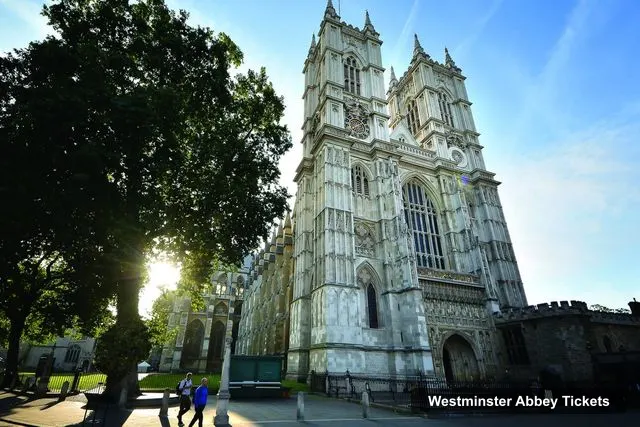
Hawksmoor and John James build the western towers
1760
George II is buried on 11 November, the last monarch buried there
1941
Incendiary bombs hit on 10 and 11 May
1987
Listed as a UNESCO World Heritage Site
2011
The wedding of Prince William and Catherine Middleton on 29 April
2018
The Queen’s Diamond Jubilee Galleries open
Westminster Abbey History: Monks and the Confessor
According to Wikipedia, Dunstan and King Edgar installed Benedictine monks on the site in about 959. Edward the Confessor started to rebuild the church between 1042 and 1052, completed it around 1060 and had it consecrated on 28 December 1065. He died on 5 January 1066, about a week later. The sources do not agree on the earliest date, since Wikidata gives 901 as the opening year while Wikipedia dates the first community to about 959, so the older date is not one I can confirm from the article.
William the Conqueror’s coronation in 1066 was the first documented one at the abbey. Wikipedia notes that Harold Godwinson was probably crowned earlier. Edward’s tomb was reopened in 1103 and he was canonised in 1161.
Westminster Abbey History Under Henry III
Almost everything you see in Westminster Abbey history terms comes from Henry III. Construction of the present church began on 6 July 1245. The chapter house was built from 1250 to 1259 and is nearly 60 feet (18 m) across, with benches for 80 monks. By 1261 Henry had spent over £29,000 and Wikipedia says the final sum may have been near £50,000. Edward’s remains were moved to a new shrine on 13 October 1269, and Henry was buried in 1272.
Edward I added to the story in 1296 when he captured the Stone of Scone and had a Coronation Chair made to hold it. In 1303 treasure was stolen from the crypt under the chapter house. For how these areas sit inside the building, my Westminster Abbey map page walks through them.
Westminster Abbey History: The Tudors to the Towers
Work resumed in 1376 under Abbot Litlyngton and Richard II, and the nave was finished with the west window in 1495. Work on the Henry VII Chapel began in 1503 and the main structure was completed by 1509. Wikipedia then gives two dates for the end of the monastery: the 1530s, when Henry VIII seized the monasteries (the abbey’s annual income was £3,000 in 1535), and 1559, when the Benedictines were ejected again. Elizabeth I re-established the church as a royal peculiar in 1560, with the new name Collegiate Church of Saint Peter.
The western towers were built by Hawksmoor and John James in the 1740s, according to Wikipedia. George II’s funeral on 11 November 1760 was the last for a monarch buried there. Wikipedia counts 18 monarchs buried at the abbey in total.
Coronations, Burials and Weddings: Westminster Abbey Facts
The abbey’s job as a royal church is the thread through the whole of Westminster Abbey history. Wikipedia counts 40 English and British monarchs crowned there since 1066, 18 monarchs buried there, at least 16 royal weddings since 1100 and more than 3,300 burials in all. Two companies working on the King James Version met in the Jerusalem Chamber in the early 1600s, and by 1612 guides were already charging visitors a penny. Oliver Cromwell had a funeral there in 1658, but Wikipedia describes him as posthumously hanged in January 1661. Several famous names are not covered by the article text I read, such as the burial of the Unknown Warrior and recent royal funerals, so I have left them out rather than quote them from memory. The official Westminster Abbey site is the place to check those.
Westminster Abbey Facts From the 20th Century
The modern chapter of Westminster Abbey history begins with war and protest.
The 20th century was violent for the abbey. On 11 June 1914 a suffragette bomb exploded inside and cracked the Stone of Scone. On 10 and 11 May 1941 incendiary bombs hit the abbey and the crossing lantern collapsed, with damage estimated at £135,000. In 1950 the broken Stone of Scone was discovered when four Scottish nationalists broke in.
Wikipedia says UNESCO listed the abbey in 1987, and that admission charges began in 1997, when the abbey had about 1.75 million visitors a year. A development costing about £23 million was completed in 2013, and the Queen’s Diamond Jubilee Galleries opened in 2018. Wikipedia gives the Weston Tower cost as £22.9 million, which differs slightly from the £23 million figure. In 2020 a 13th-century sacristy was uncovered. The wedding of Prince William and Catherine Middleton took place there on 29 April 2011.
Westminster Abbey History in Numbers
The infobox gives the vault height as 101 feet (31 m), and the interior section says 102 feet (31 m), so I would say about 31 metres. The nave has eleven bays, but the article gives no length in metres. The Pyx Chamber is a late 11th-century undercroft, and the Pyx Door comes from a tree felled between 1032 and 1064.
14 Westminster Abbey Facts With Sources
Benedictine monks were installed on the site in about 959 (Wikipedia).
Wikidata gives 901 as the opening year, which differs from the dates in Wikipedia (Wikidata).
The Confessor’s church was consecrated on 28 December 1065 (Wikipedia).
Henry III began the present church on 6 July 1245 (Wikipedia).
The chapter house was built from 1250 to 1259 and is nearly 60 feet (18 m) across (Wikipedia).
Henry had spent over £29,000 by 1261, and the final sum may have been near £50,000 (Wikipedia).
The vault is 101 feet (31 m) high in the infobox and 102 feet (31 m) in the text (Wikipedia).
The Henry VII Chapel was begun in 1503 and the main structure was completed by 1509 (Wikipedia).
Forty English and British monarchs have been crowned there since 1066 (Wikipedia).
Eighteen English, Scottish and British monarchs are buried there (Wikipedia).
At least 16 royal weddings have taken place there since 1100 (Wikipedia).
More than 3,300 people are buried there (Wikipedia).
It became a UNESCO World Heritage Site in 1987, reference 426 (Wikipedia).
Admission charges began in 1997, with about 1.75 million visitors a year (Wikipedia).
See Westminster Abbey History With a Guide
A guide helps to connect the Westminster Abbey history above to the stones, and the guided option I would pick is the Westminster Abbey, Big Ben and Buckingham Guided Tour. It runs about 3 hours at $44, rated 4.8 from 4,051 reviews. Note that the listing has a 3-hour option with exteriors only and a 4-hour option with a fully guided tour inside the abbey, so choose the longer one if the interior matters to you.
Rosotravel - United Kingdom Tours & Experiences
Westminster Abbey, Big Ben & Buckingham Guided Tour
★4.8 (4,051 reviews)
3 hours
Free cancellation
My pick: The most-reviewed guided tour: 4.8 from 4,051 reviews at $44; the 4-hour option is the one that goes inside the abbey.
What you get, where you meet, what reviewers say
Included
✓ 4-hour option: Fully-guided tour inside Westminster Abbey and City with Skip-the-Line Tickets
✓ 3-hour option: Guided tour of the City and Abbey exteriors (entry for service only)
✓ 3-hour option: Free entry for organ recital, evensong or mass at Westminster Abbey (without guide)
✓ Walking tour of London highlights (Big Ben, Buckingham Palace – exterior views only)
✓ Blue Badge Guide (the highest rank in the UK)
✓ All taxes and fees
Not included / not suitable
✕ 3-hour option: Guided tour inside Westminster Abbey (includes self-visit for a free organ recital or evensong at the Abbey)
✕ Tickets to Buckingham Palace (all options)
✕ Tickets to Big Ben (all options)
✕ Headsets (all options)
Meeting point: Meeting point may vary depending on the option you select. Check availability for more details.
Cancellation: Cancel up to 24 hours in advance for a full refund
“Natalia was a joy as my guide . She was very knowledgeable and took real good care of my group and I. I recommend this tour especially if Natalia is your guide💜💜” – GetYourGuide review
Wikipedia says Edward the Confessor began rebuilding the abbey in 1042 to 1052 and that it was consecrated on 28 December 1065. The present Gothic church was begun by Henry III on 6 July 1245. Wikidata gives 901 as the opening year, which is far earlier than either date, so I rely on Wikipedia for the building stages.
Who founded Westminster Abbey?+
Wikipedia says Dunstan and King Edgar installed Benedictine monks on the site in about 959. Edward the Confessor then rebuilt the church, and Henry III rebuilt it again in the Gothic style from 1245.
How many monarchs have been crowned at Westminster Abbey?+
Wikipedia says 40 English and British monarchs have been crowned there since 1066, and that 18 English, Scottish and British monarchs are buried there. It also counts at least 16 royal weddings since 1100, and more than 3,300 burials.
Is Westminster Abbey a cathedral?+
No. Wikipedia describes it as an Anglican church, formally the Collegiate Church of Saint Peter at Westminster. Elizabeth I re-established it as a royal peculiar in 1560. It was briefly a second cathedral of London from 1552 until 1556.
When did Westminster Abbey become a World Heritage Site?+
Wikipedia says UNESCO listed it in 1987, under reference number 426, at the 11th session. The listing covers the Abbey together with the Palace of Westminster and St Margaret's Church.
Who was the last monarch buried in Westminster Abbey?+
Wikipedia says George II, whose funeral was on 11 November 1760, was the last monarch buried there. The article text I read does not cover later royal funerals, so check the official Westminster Abbey site for recent ones.