Natural History Museum London facts are more interesting once you know the building was a Victorian competition winner that changed architects halfway. This page gives a dated timeline, the story by period and 14 facts with their sources. I wrote it from Wikipedia and Wikidata, and I give numbers exactly as they appear there. If you are ready to plan the visit, my page on tickets for the Natural History Museum London compares the guided tours, priority entry and audio options.
Natural History Museum London History Timeline
Year
What happened
1756
Sir Hans Sloane’s collection is housed at Montagu House, Bloomsbury, in the British Museum
1856
Richard Owen is appointed Superintendent of the natural history departments of the British Museum
1864
A competition is held to design a new museum; 33 entries
December 1865
Francis Fowke, the winner, dies
February 1866
Alfred Waterhouse is hired and takes over the scheme
1873
Building work begins
1880
The building is completed
18 April 1881
The museum opens
12 May 1905
The Diplodocus replica Dippy is unveiled
1938
The museum takes ownership of the Tring outpost
1963
The British Museum Act makes the museum independent
2002
Phase one of the Darwin Centre opens
September 2009
Phase two of the Darwin Centre opens
2017
The blue whale skeleton Hope replaces Dippy
Natural History Museum London Facts: From Sloane to Owen
The museum began inside the British Museum. Wikipedia says the collection of Sir Hans Sloane was initially housed in Montagu House, Bloomsbury, in 1756, and that Richard Owen was appointed Superintendent of the natural history departments in 1856. The sources I used do not spell out how the case for a separate building was argued, so I only give the dates. The museum became independent with the British Museum Act 1963, and its formal title changed to Natural History Museum under the Museums and Galleries Act 1992, per Wikipedia.
How the Building Was Designed
In 1864 a competition was held to design the new museum, and Wikipedia says only 33 entries were submitted. The winner was Francis Fowke, who died in December 1865. Alfred Waterhouse was hired in February 1866 and took over the scheme. Work began in 1873 and was completed in 1880, and the museum opened on 18 April 1881. Wikidata gives 1881 for the opening and Waterhouse as architect.
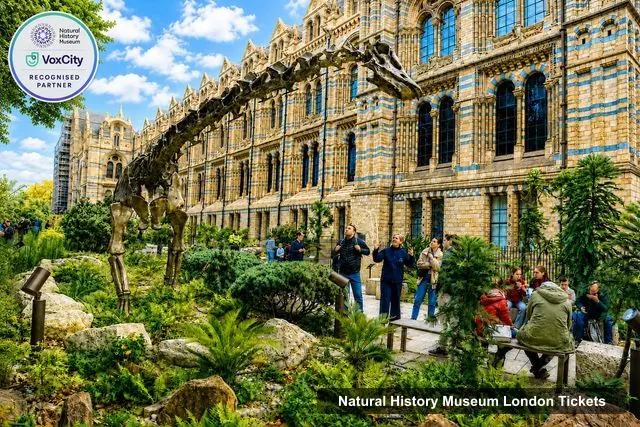
The look of the building comes from its materials. Wikipedia notes that both the interiors and exteriors of the Waterhouse building make extensive use of architectural terracotta tiles, which is why the walls carry carved animals and plants.
Dippy, Hope and Hintze Hall
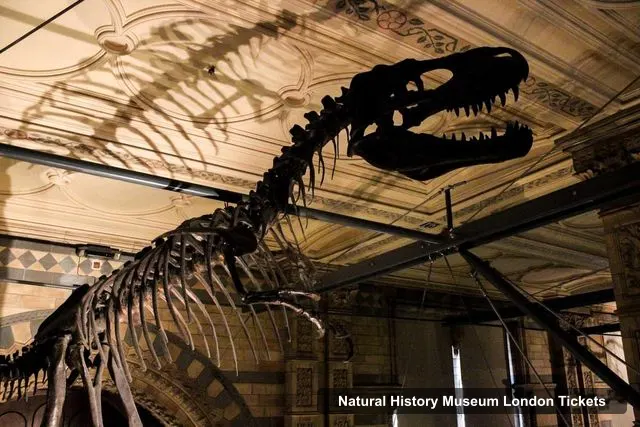
The most famous exhibit changes in the Natural History Museum London facts that people repeat. Dippy, a replica of a Diplodocus, was unveiled on 12 May 1905 as a gift from Andrew Carnegie, who paid 2,000 pounds, per Wikipedia. Dippy was removed in early 2017, and the blue whale skeleton Hope replaced it. Wikipedia says the BBC documentary about Hope aired on 13 July 2017, the day before Hope was unveiled for public display.
The Collection, Darwin Centre and Tring
The scale of the collection is the number visitors remember. Wikipedia says the museum holds some 80 million items across five collections. The Darwin Centre houses much of the science behind them: phase one opened to the public in 2002 and phase two in September 2009. The East Pavilion is a space for the changing Wildlife Photographer of the Year exhibition. The museum also has an outpost at Tring, Hertfordshire, built by Lionel Walter Rothschild, which the museum took ownership of in 1938.
Natural History Museum London Facts About Visitors
Wikipedia gives 7,116,929 visitors in 2025 and says the museum was the UK’s most visited attraction that year. Wikidata gives 1,571,413 visitors a year for 2021, a pandemic-affected year, so the two numbers show how far attendance has moved. Wikipedia does not give a 2019 figure on the page I used, and I do not guess one. With crowds like that, I check the Natural History Museum London opening hours before I go.
Natural History Museum London Facts Behind the Name Changes
The museum has had more than one identity, and that explains why older books describe it differently. For most of its first century it was the natural history department of the British Museum, even though it had its own building from 1881. The 1963 act gave it independence, and the 1992 act gave it its present formal title. If a guidebook, a school worksheet or a ticket listing calls it something else, it is usually describing the same institution at a different point in that timeline.
Natural History Museum London Facts Worth Knowing Before You Book
Three of the facts above change how I plan a visit. First, the building is a Victorian museum, so the great hall and its terracotta are part of the visit, not only the specimens. Second, Hope hangs where Dippy stood, so a guide who talks about both gives you the story of the hall in a few sentences. Third, with 7,116,929 visitors in 2025 by Wikipedia’s figure, the museum is busy enough that I prefer a booked slot over turning up on the day. The listings I compare range from a 30-minute audio visit to a 2.5-hour guided tour and a private tour, so the choice mostly comes down to how much time you have and whether you want a person or a device to explain the building.
14 Natural History Museum London Facts With Sources
Sir Hans Sloane’s collection was housed in Montagu House, Bloomsbury, in 1756 (Wikipedia).
Richard Owen was appointed Superintendent of the natural history departments of the British Museum in 1856 (Wikipedia).
A design competition was held in 1864 and received 33 submissions (Wikipedia).
The winner, Francis Fowke, died in December 1865 (Wikipedia).
Alfred Waterhouse was hired in February 1866 (Wikipedia).
Work began in 1873 and was completed in 1880 (Wikipedia).
The museum opened on 18 April 1881 (Wikipedia); Wikidata gives 1881 (Wikidata).
The building makes extensive use of architectural terracotta tiles inside and out (Wikipedia).
Dippy was unveiled on 12 May 1905, a gift from Andrew Carnegie who paid 2,000 pounds (Wikipedia).
Dippy was removed in early 2017 and replaced by the blue whale skeleton Hope (Wikipedia).
The Darwin Centre opened in two phases, in 2002 and September 2009 (Wikipedia).
The museum holds some 80 million items across five collections (Wikipedia).
It became independent of the British Museum with the British Museum Act 1963 (Wikipedia).
It had 7,116,929 visitors in 2025 and was the UK’s most visited attraction that year (Wikipedia).
What I Could Not Confirm
Not every one of the Natural History Museum London facts you see online can be sourced. The sources I used do not give the museum’s exact floor area, the number of rooms or a 2019 visitor count, so I leave them out. For what is on each floor, see my Natural History Museum London map. Closed galleries and temporary exhibitions change, so check the official site before you go.
Seeing the Natural History Museum London Facts in Person
A guide is the easiest way to connect these Natural History Museum London facts to the building. The best-reviewed full guided tour in my comparison is the Natural History Museum Guided Tour at $117, rated 4.9 from 96 reviews, which runs about 2.5 hours.
Babylon Tours London
Natural History Museum Guided Tour
★4.9 (96 reviews)
2.5 hours
Free cancellation
My pick: The top-rated guided tour: $117, 4.9 from 96 reviews, about 2.5 hours.
What you get, where you meet, what reviewers say
Included
✓ Professional art historian guide
✓ Private and semi-private options
Not included / not suitable
✕ Gratuities (optional)
✕ Hotel pick-up and drop off
✕ Food and drinks
✕ Temporary exhibits
Meeting point: Meeting point may vary depending on the option you select. Check availability for more details.
Languages: English
Duration: 2.5 hours
Cancellation: Cancel up to 24 hours in advance for a full refund
“Very knowledgeable and helpful guide. Matilda was great!” – GetYourGuide review
If you only want a short audio-led visit, the Tour with Reserved Entry and Audio is $7, rated 4.1 from 367 reviews, and takes 30 minutes by the listing.
Vox City Walks
Natural History Museum Tour + Reserved Entry & Audio
★4.1 (367 reviews)
30 minutes
Free cancellation
My pick: The budget pick: $7, 4.1 from 367 reviews, reserved entry with audio.
What you get, where you meet, what reviewers say
Included
✓ Natural History Museum reserved entry
✓ Live 40-min guided tour in English only (exterior and museum introduction)
✓ Digital map and downloadable audio guide app
✓ Multilingual audio commentary in English, Chinese, French, German, Italian, Korean and Spanish
✓ Child-friendly audio guide in English only
✓ Donation to the Natural History Museum
Not included / not suitable
✕ Headset and mobile device
✕ Guided tour of the exhibits
✕ Priority entry
✕ Entry to special exhibitions
Meeting point: Meet your tour guide under the large white arch entrance for ‘Victoria & Albert Museum' located on Exhibition Road Courtyard (near Knightsbridge).
Your guide will be holding a ‘VoxCity’ flag. Please arrive 5 minutes early and bring your own headphones.
To pin point exact location please use - what3words: cube.stump.wrong Knightsbridge, London SW7 2RL, UK
Languages: English
Duration: 30 minutes
Cancellation: Cancel up to 24 hours in advance for a full refund
“The Historical Museum in London is excellent, outstanding!” – GetYourGuide review
When did the Natural History Museum in London open?+
Wikipedia says work on the Waterhouse building began in 1873 and was completed in 1880, and that the museum opened on 18 April 1881. Wikidata also gives 1881 as the opening year.
Who designed the Natural History Museum building?+
Alfred Waterhouse, per Wikidata and Wikipedia. A competition was held in 1864, won by Francis Fowke, who died in December 1865. Waterhouse was hired in February 1866 and took over the scheme.
What happened to Dippy the dinosaur?+
Dippy, a replica of a Diplodocus given by Andrew Carnegie, was unveiled on 12 May 1905 and was removed in early 2017. The blue whale skeleton Hope replaced it in Hintze Hall, per Wikipedia.
How many items are in the Natural History Museum's collection?+
Wikipedia says the museum holds some 80 million items across five collections.
How many people visit the Natural History Museum each year?+
Wikipedia gives 7,116,929 visitors in 2025 and says it was the UK's most visited attraction that year. Wikidata's figure for 2021 is 1,571,413 visitors.