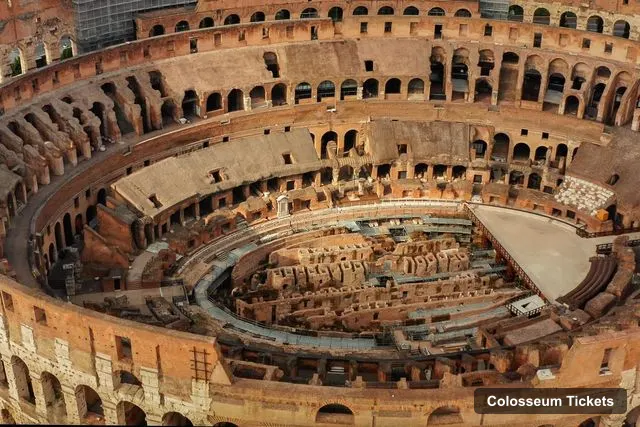
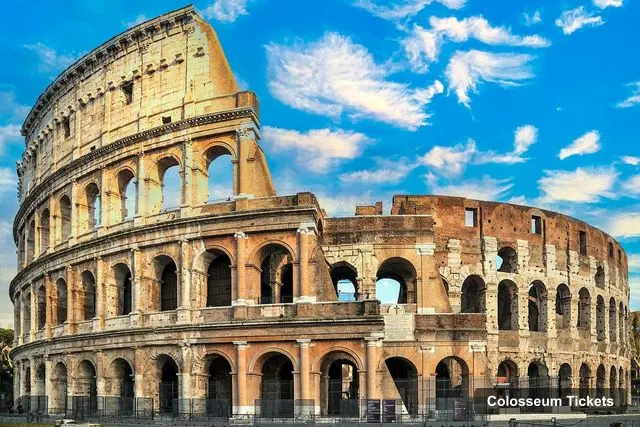
Colosseum facts are easier to remember when they come with dates, so this page has both: a timeline, the story by period, and a numbered list of facts with the source for each. I wrote it from Wikipedia, the official site and Wikidata, and I give numbers exactly as those sources give them. The Colosseum history here ends where a visit begins, and the Colosseum facts at the end are the ones I would repeat to a friend, so if you are ready to go in, my page on tickets for the Colosseum compares all 10 options.
Colosseum History Timeline
Year
What happened
64
The Great Fire of Rome; Nero takes much of the area for the Domus Aurea
72
Construction begins under Vespasian
79
Vespasian dies; the building is finished up to the third storey
80
Titus completes the top level; inaugural games held in 80 or 81
81 to 96
Domitian rules and has the underground tunnels built
217
A major fire, caused by lightning according to Dio Cassius, destroys the wooden upper levels
438
The official site dates the end of gladiatorial games to this year, by order of Valentinian III
443
A major earthquake probably damages the building
About 1200
The Frangipani family fortify it as a castle
1349
An earthquake collapses the outer south side
1749
Pope Benedict XIV consecrates it to the Passion of Christ
1930s
The arena substructure is fully exposed
1993 to 2000
A major restoration programme
2013 to 2016
The first full cleaning and repair, completed on 1 July 2016
2025
The Commodus Passage opens to the public on 27 October 2025
Colosseum Facts: Who Built It and Why
The Colosseum was built by the Flavian emperors, which is why Wikipedia says later classicists named it the Flavian Amphitheatre. The site was a low valley between the Caelian, Esquiline and Palatine Hills, and it had been Nero’s private lake and gardens after the Great Fire of 64. Wikipedia reads Vespasian’s choice as a populist gesture: giving the land back to the people. Construction was funded by spoils taken from the Jewish Temple after the First Jewish-Roman War, according to a reconstructed inscription found on the site, per Wikipedia.
The name came later. The official site says the building became known as the Colosseum because of a colossal statue that stood nearby, and Wikipedia identifies it as a bronze Colossus of Nero, moved beside the amphitheatre by Hadrian.
Colosseum Facts About How It Worked
The Colosseum facts that surprise people most about its design are practical ones. The building is free-standing, not cut into a hillside, and Wikipedia describes it as two theatres back to back. It is built of travertine, Roman concrete and tuff, and the outer wall needed over 100,000 cubic metres of travertine, set without mortar and held by 300 tons of iron clamps.
Getting a crowd in and out was the engineering challenge. There were eighty ground-level entrances, 76 of them for ordinary spectators, each numbered, and passages called vomitoria that emptied a tier within minutes. Tickets were numbered pottery shards that sent each spectator to a section and row. The seating followed social rank, with the emperor’s and the Vestal Virgins’ boxes at the north and south ends and the senators on a podium at arena level.
Above it all, 240 mast corbels around the top of the attic carried a retractable awning, the velarium, worked by sailors from the fleet at Misenum.
Under the Arena: The Hypogeum
Under the floor was the hypogeum, a two-level network of tunnels and cages that Domitian had built. Wikipedia says it held gladiators and animals before the contests, and that 80 vertical shafts gave quick access to the arena for caged animals and scenery. Lifts and pulleys raised sets and props. This is the same space you see today with an underground ticket, which I explain on my Colosseum map page with the route inside.
Colosseum Facts From the Arena: The Spectacles
The shows, called munera, were given by private individuals, not the state, and included gladiator contests, animal hunts, executions and dramas based on mythology. Wikipedia reports, citing Dio Cassius, that over 9,000 wild animals were killed during the inaugural games. Accounts of simulated sea battles in the early days are debated: Wikipedia says it is unclear how the arena could have been waterproofed, and that the hypogeum ended any flooding early in the Colosseum’s life.
Colosseum Facts on Decline, Reuse and Ruin
The official site dates the start of the Colosseum’s slow decline to 438, when Valentinian III abolished the gladiatorial games. Wikipedia lists a series of blows after that: the fire of 217, repairs through the 5th and 6th centuries and the earthquake of 443. By the late 6th century a small chapel had been built into it, the arena became a cemetery and the arcades became housing and workshops.
Around 1200 the Frangipani family fortified it as a castle. The earthquake of 1349 caused the south side to collapse, and the fallen stone was reused for palaces, churches and hospitals around Rome. The official site adds that in the Middle Ages and Renaissance part of it was used for the construction of St. Peter’s Basilica. Wikipedia describes the interior as stripped of stone, and notes that the marble facade was burned to make quicklime.
Rescue and Restoration: Recent Colosseum Facts
In 1749 Pope Benedict XIV forbade using the Colosseum as a quarry and consecrated it to the Passion of Christ, although Wikipedia adds there is no historical evidence for the claim that early Christians were martyred there. Later popes cleared vegetation and reinforced the facade with brick wedges in 1807 and 1827. The arena substructure was partly excavated in 1810 to 1814 and fully exposed in the 1930s.
A restoration programme ran from 1993 to 2000 at a cost of 40 billion lire. A second, the first full cleaning and repair in the building’s history, began in 2013 and finished on 1 July 2016 with a sponsorship of 25 million euros. The Commodus Passage, the corridor emperors used to enter discreetly, was restored from October 2024 to September 2025 and opened to the public on 27 October 2025, per Wikipedia. Wikipedia adds that another restoration project was planned for 2026, so check the official site for closed areas.
14 Colosseum Facts With Sources
Construction began under Vespasian in 72 AD and finished in AD 80 under Titus (Wikipedia).
Wikidata gives the opening year as 81, while Wikipedia says the inaugural games were held in 80 or 81 (Wikidata).
The building is 189 metres long and 156 metres wide, with a base area of 24,000 square metres (Wikipedia).
It is the largest ancient amphitheatre ever built and the largest standing amphitheatre in the world (Wikipedia).
Estimated capacity was 50,000 to 80,000 spectators, with an average audience of some 65,000 (Wikipedia).
It was financed by spoils from the Jewish Temple after the First Jewish-Roman War (Wikipedia).
It had eighty entrances at ground level, 76 of them for ordinary spectators (Wikipedia).
The outer wall used over 100,000 cubic metres of travertine and 300 tons of iron clamps (Wikipedia).
Over 9,000 wild animals were killed during the inaugural games, according to Dio Cassius as reported by Wikipedia (Wikipedia).
The hypogeum had 80 vertical shafts to the arena (Wikipedia).
A retractable awning hung from 240 mast corbels (Wikipedia).
Gladiatorial games were abolished in 438 by order of Valentinian III (Colosseo.it).
The Colosseum had 5,832,996 visitors in 2022 (Wikidata).
See Where the Colosseum Facts Happened
A guide turns these Colosseum facts into a route you can walk, and the one I would pick for the history is Crown Tours. It is the most-reviewed Colosseum tour in my comparison at $55, with 4.8 stars from 94,213 reviews, and it covers the Colosseum, Roman Forum and Palatine Hill in about 2.5 hours.
Crown Tours
Colosseum, Roman Forum & Palatine Hill Guided Tour
★4.8 (94,213 reviews)
2.5 hours
Free cancellation
My pick: The most-reviewed guided tour: 4.8 from 94,213 reviews, Forum and Palatine included, arena floor as an option.
What you get, where you meet, what reviewers say
Included
✓ Entry to the Colosseum
✓ Access to the Colosseum Arena (if option selected)
✓ Entry to the Roman Forum and Palatine Hill
✓ Headsets to hear the tour guide clearly
✓ Colosseum entry ticket (18€)
✓ Colosseum entry ticket with Arena (if option selected 24€)
Not included / not suitable
✕ Transportation
✕ Food and drinks
✕ Tips
Meeting point: This activity has 2 meeting points. Your meeting point depends on the option you select. Monti, 00184 Rome, Metropolitan City of Rome Capital, Italy
Cancellation: Cancel up to 3 days in advance for a full refund
“Valeria was an excellent guide. We’ve been in Europe for 6 weeks and undertaken several guided tours and he was the best guide we’ve had. Knowledgeable and passionate about his subject.” – GetYourGuide review
Construction began under Emperor Vespasian in 72 AD and was completed in AD 80 under his successor Titus, per Wikipedia. Wikidata gives the opening year as 81, and Wikipedia says the inaugural games were held in 80 or 81 AD. Domitian made further changes, including the underground tunnels.
How many people could the Colosseum hold?+
Wikipedia gives an estimated 50,000 to 80,000 spectators at various points in its history, with an average audience of some 65,000. An ancient calendar of the year 354 says 87,000, but Wikipedia notes that modern estimates put the figure at around 50,000.
Why is it called the Colosseum?+
The official site says the building became known as the Colosseum because of a colossal statue that stood nearby. Wikipedia identifies it as a bronze statue of Nero, and says the amphitheatre was first called the Flavian Amphitheatre after the dynasty that built it.
Who built the Colosseum?+
The Flavian emperors: Vespasian started it, Titus finished it and Domitian changed it. Wikipedia says the work was funded by spoils from the Jewish Temple after the First Jewish-Roman War in 70 AD.
Why did the Colosseum fall into ruin?+
Earthquakes, fire and reuse. A fire in 217 and an earthquake in 443 damaged it, and the earthquake of 1349 brought down the outer south side. Later its stone was taken for other buildings. The official site says part of it went into the construction of St. Peter's Basilica.